Reading to grandchildren who live far away
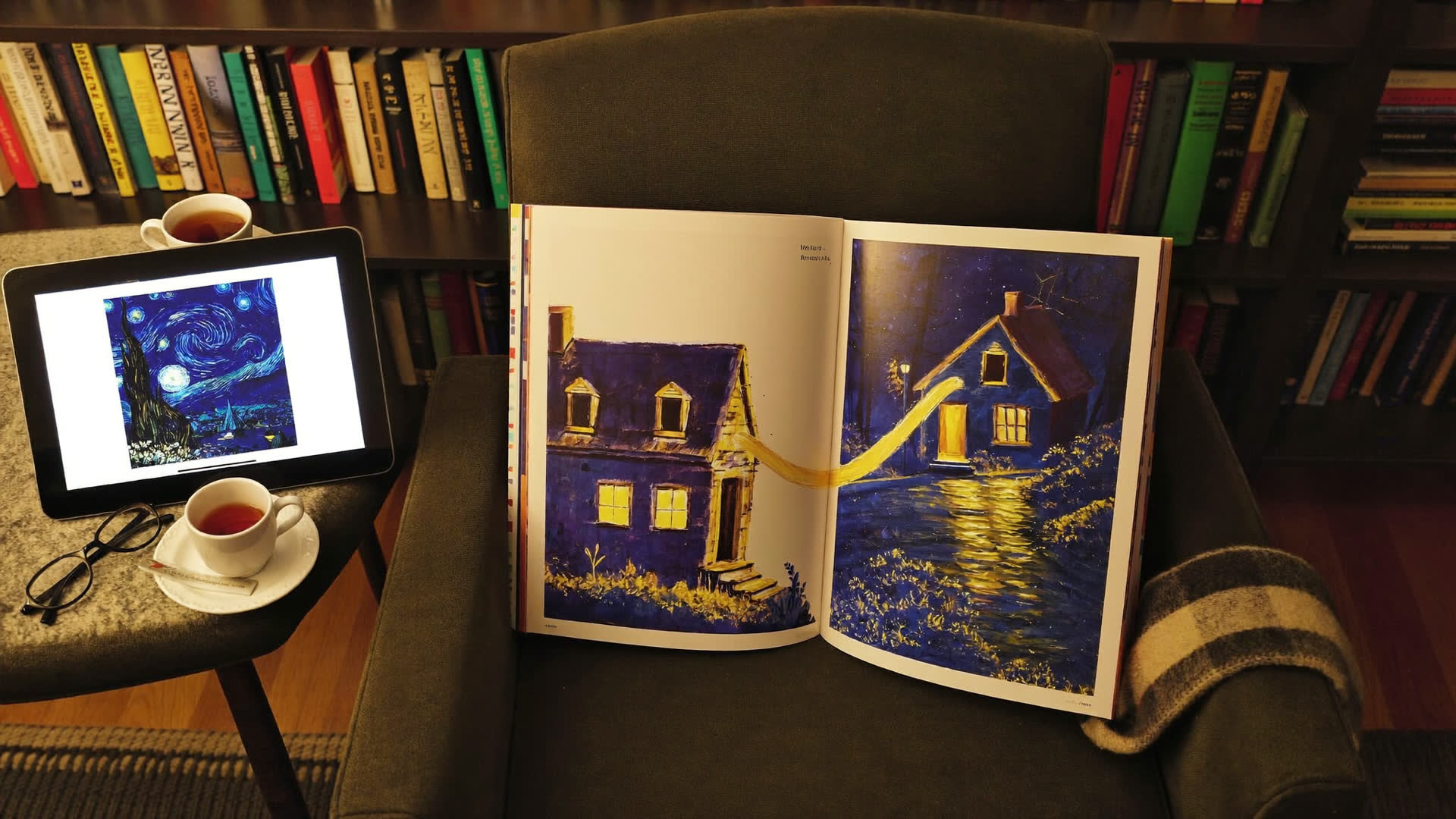
You read to their parent once. Now they're in another state, or another hemisphere, and a video call somehow isn't the same. The good news is that the thing that made you close in the first place, a story, the same one, over and over, still works at any distance. It just needs setting up a little differently.
Six things that help.
Be the person with the book
Grandparents who have a 'thing' fare better than grandparents who have a call. If you're always the one with a story, small children learn what to expect from you, and they come to the screen willingly.
Same book, both ends
A story read at a child who can't see the pictures is hard work for everyone. Having the same book at both ends, a physical copy each, or one shared on both screens, turns a call into something you're doing together.
Short and often beats long and rare
Ten minutes twice a week builds far more familiarity than an hour once a month. Little ones measure closeness in frequency, not duration.
Mind the time zones: theirs, not yours
Bedtime is the best slot for a story, but only if it's bedtime where they are. A gentle 7pm read in Brisbane is a 9am interruption in London. Work backwards from their routine.
Let the parent set you up, then take over
Ask the parent at home to get the child settled and the device propped up, then hand the reading entirely to you. Splitting the job avoids the call becoming another thing they have to run.
Repeat shamelessly
Children ask for the same book because repetition is how they build mastery and comfort. Reading it for the fortieth time is not a failure of imagination. It is the point.
The same story, on both screens
StoryLink is an Australian app that puts the same storybook on both devices, so you turn the page and they see it, live, from anywhere. You can also record any book in your own voice for the nights a call isn't possible. It's free on the App Store in Australia and New Zealand.
More reading: StoryLink home · the blog · what StoryLink does · how we make the books · Bedtime when you work away · Bedtime across two homes
“Little ones measure closeness in frequency, not duration.”
You might be wondering.
How can I read a bedtime story to my grandchild overseas?
Use a video call where you can both see the same book: either a physical copy at each end, or an app that puts the same storybook on both screens so the pages turn together. Reading the same pictures matters far more than the call quality.
How often should I call my grandchildren?
Short and regular works better than long and occasional. Ten to fifteen minutes, a couple of times a week, at a consistent point in their routine, builds far more familiarity than a rare long call.
My grandchild loses interest on video calls. What can I do?
Give the call a job. Rather than asking questions, read a story, look at pictures, or do an activity you can both see. Shared attention on something is much easier for a small child than face-to-face conversation.

Tonight, read together.
Free on the App Store · Australia and New Zealand